The Case for Co-Governance: A Narrative Series

How can the next 250 years of democracy be built better for all of us? This summer, explore "The Case for Co-Governance" with us — a collection of voices and strategies showing us the power of working together to build and govern a future that can truly deliver the promise of out multiracial nation.
The 250th anniversary of the Declaration of Independence finds democracy at a crossroads in the United States. How can we defend and reclaim American democracy, and how do we build new strategies and structures that can truly honor its unfulfilled promise of “life, liberty, and the pursuit of happiness” for all? Race Forward and Partners for Dignity & Rights are curating a narrative series from multiple voices looking at how co-governance can offer solutions to this question.
This summer, invited partners from around the country will share their experience and insights in response to our foundational arguments in “The Case for Co-Governance”:
1. Co-Governance Combats Authoritarianism
2. Co-Governance Builds Civic Trust
3. Co-Governance Helps Communities of Color Build Power
4. Co-Governance Delivers Better Outcomes for Everyone
5. Co-Governance is Proven: History and Practice Show it Works
6. Co-Governance Builds Legitimacy by Making Democracy Something You Do, Not Just Something You Receive
Some responding writers are practitioners doing co-governance on the ground in places across the country, while others are researching or writing about it from an ecosystem perspective or connecting it to important and relevant issues of our day. All responding pieces will be published across various media outlets and then reposted on this page to stitch together a full view of the collective writing.
We encourage you to read and explore all of the different perspectives shared throughout this narrative series as we collectively determine how to live up to the values articulated in our nation’s founding documents: life, liberty, and the pursuit of happiness.
Check out more from the narrative series below:
FOUNDATIONAL ARGUMENT
RESPONSES
Niketa Brar, independent consultant: Fighting Americans’ Civic Trauma Will Require a New Approach to Governance published by NextCity on July 31, 2026
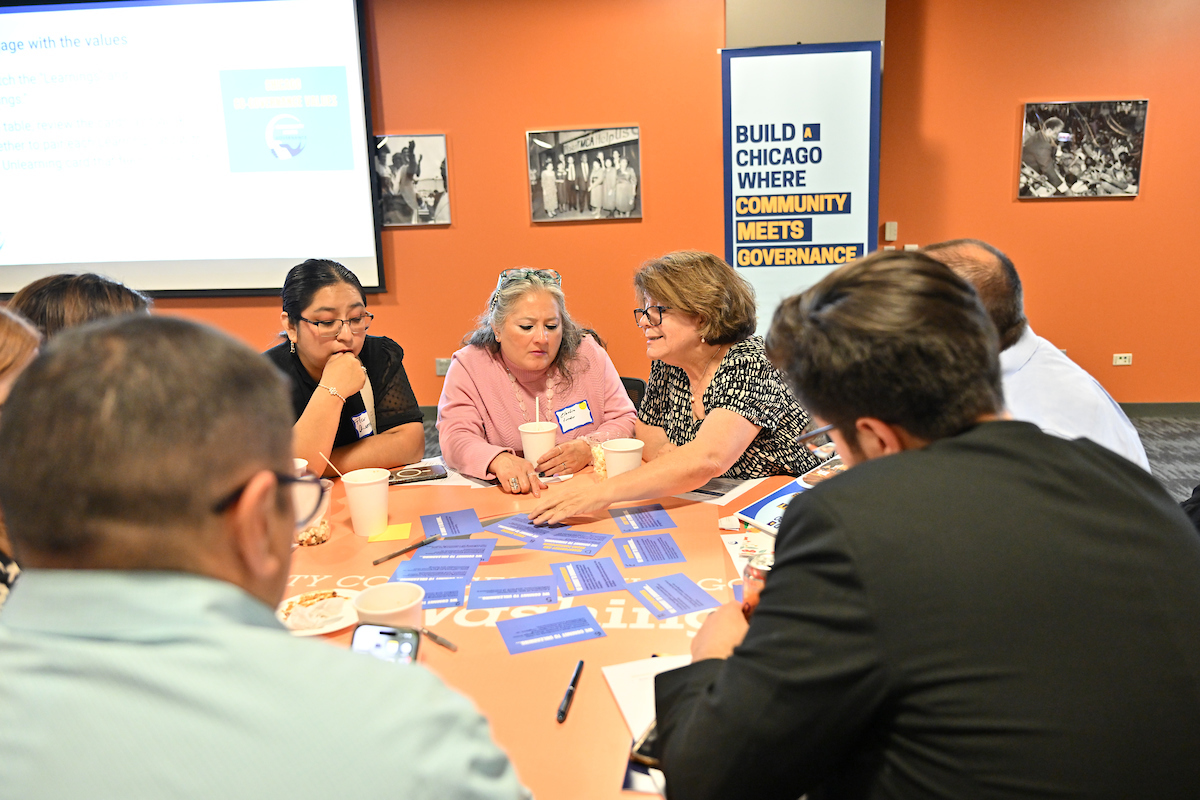
Rachel Pate, Christina Cordova-Herrera, Lyric Griffin and Cynthia Avila, Chicago United for Equity and Chicago Office of Equity & Racial Justice: From community challenges to solutions: How co-governance leads to better results published on The Triibe on July 21, 2026
Candace Moore, Race Forward’s Vice President of Place, Policy, and Power: We Can Strengthen Democracy By Championing Co-Governance published by News One on July 6, 2026
Candace Moore, Race Forward’s Vice President of Place, Policy, and Power: This Juneteenth let’s build systems to protect those most impacted by harm published in Afro News on Jun 19, 2026.
Stay tuned for more responses coming soon!
REPORTS
Co-Governing Toward a Multiracial Democracy by Race Forward and Partners for Dignity and Rights