250 Years of History and The Next Expansion of Democracy
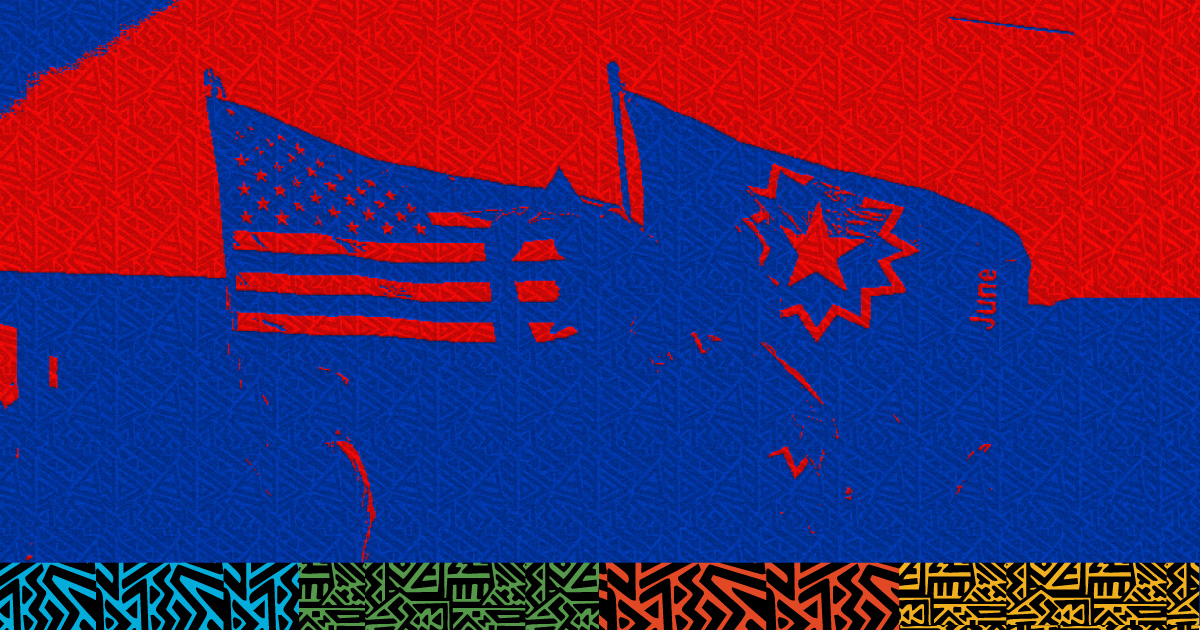

The American calendar offers a compressed political education for anyone willing to read it. Juneteenth and July 4th arrive within weeks of each other, close enough to force a choice about what kind of freedom story we intend to tell, and who we intend to tell it for. One date is framed as a national origin. The other is a reckoning that exposes the gap between what this country declared and what it was willing to enforce.
On June 19, 1865, Union troops arrived in Galveston, Texas and announced that enslaved Black people were free, more than two years after the Emancipation Proclamation. Freedom was legal on paper. It took organized power to make it real.
Juneteenth reminds us that democracy is not a promise that fulfills itself. Democracy is a contest over who counts as “the people,” whose rights are enforceable, and whether institutions will be compelled to make those rights real in practice.
When people ask why I keep coming back to the role institutions play in our lives, I think about my Great Uncle James. He was part of the Tuskegee Experiments, where Black men were misled into believing they were receiving treatment while the government observed the effects of untreated syphilis. When I was 15, my family received a federal apology letter and a check for a little over $30. It was meant to close a chapter. For me, it opened one. It made real the distance between a promise and fulfillment.
In this moment, the struggle over democracy is playing out through election subversion, the criminalization of dissent, attacks on public education, and the systematic erasure of histories that explain how we got here. This is racialized authoritarianism at work. We respond first by naming it. Then with organized power.
On Juneteenth, July 4th, and why co-governance is the next democratic expansion
Democracy expands when Black people force the country to confront itself
Democracy in this country has expanded through confrontation, organizing, and demands that institutions be compelled to honor what they claim. Any honest account of American democracy has to begin with the Black freedom struggle.
During Reconstruction, Black legislators wrote new state constitutions, built public schools, and pushed through the 14th Amendment’s guarantee of citizenship and equal protection, legal infrastructure that remains central to civil rights enforcement. The question has always been whether the country would uphold what it wrote. Frederick Douglass argued throughout his life that the United States could not be what it claimed to be while denying Black people full rights and dignity.
The violent overthrow of Reconstruction demonstrated how anti-democracy operates when it senses real power shifting. The methods update across eras, but the logic stays the same: keep democracy thin, keep participation dangerous, keep the definition of “the people” narrow. Ida B. Wells documented racial terror and lynching in the post-Reconstruction era and made clear how violence was used to uphold racial hierarchy.
The Civil Rights Movement is frequently remembered as a story about moral persuasion and national conscience. That retelling downplays power. The movement’s impact came from disciplined organizing and a willingness to treat the state as a site of struggle rather than a neutral referee. Fannie Lou Hamer testified publicly about the violence used to block Black political participation and helped challenge the exclusion of Black Mississippians from the political process. The movement reshaped the democratic baseline not because the country chose to extend rights, but because organized people made that choice unavoidable.
From abolition through Reconstruction through the Civil Rights Movement, the lesson is consistent: every major expansion of American democracy has required Black people to force the country to confront the gap between what it says and what it does.
Anti-Blackness is a fulcrum
Centering Blackness in a conversation about democracy means identifying a mechanism, not ranking suffering.
Anti-Blackness has long functioned as a fulcrum of white supremacy in the United States. In this country, anti-Black racism has supplied leverage across centuries: slavery, segregation, disenfranchisement, criminalization, and the politics of austerity and fear. And the tools built to target Black communities have never stayed confined to Black communities.
Attacks on Black political power open the door to attacks on immigrant rights, Indigenous sovereignty, trans people, reproductive freedom, and multiracial coalition. When anti-Blackness weakens democratic protections for Black people, it weakens the democratic floor for everyone.
Racialized authoritarianism moves through gender, class, immigration status, sexuality, religion, and disability to decide who belongs, who is protected, who is deserving, and who gets to govern. The strategy is isolation. Teach each community that someone else’s exclusion is the price of safety. Build fear. Then consolidate power.
If we want multiracial democracy, our strategy has to reverse that logic. We have to see the attacks as connected. We have to refuse the wedge. We have to stay clear about what is happening and what it will take to stop it.
Race is the terrain
Too much of the pro-democracy and progressive field is still tempted to treat race as a communications liability to be managed rather than the central terrain on which democracy has always been contested. I understand the temptation. Naming race can feel like a narrowing move. Clarity demands otherwise.
We cannot defeat racialized authoritarianism with a race-neutral strategy. We cannot rebuild democratic trust while avoiding the communities most harmed by state violence, exclusion, and extraction. A democracy strategy that avoids race will fail, because race and democracy are inseparable.
Co-governance makes democracy real
If democracy means the people govern, then governance systems must give communities real ways to shape priorities, budgets, policy design, implementation, and accountability. Co-governance is a democratic requirement. It is how democracy becomes tangible.
This is the clearest lesson the Black freedom struggle offers. Democratic expansion has been achieved through organized pressure, enforceable rights, and institutions that answer to the people. Co-governance is a contemporary expression of that same demand: make power shareable, make decisions accountable, make democracy real.
The next expansion of American democracy will be measured not in shared language but in shared decision-making. And the readiness to govern that kind of democracy is not something we can wait for institutions to develop on their own. We have to build it.
DemocracyIs: what we build together
At Race Forward, we believe progress happens when movements, governing institutions, and cross-sector partners are aligned toward a shared vision of a just, multiracial democracy. Through our DemocracyIs: campaign, we are building public understanding of democracy as a practice of belonging, participation, and shared governance.
DemocracyIs: ________.
Complete the sentence. Then join the work of making it real.
In this video, Glenn Harris, President of Race Forward, introduces DemocracyIs:—a national campaign rooted in the belief that democracy and racial justice are inseparable. While our movements have often been forced into a defensive posture to protect hard-won gains, this moment demands more than just defense. It is a moment to govern, to imagine, and to build a multiracial democracy where everyone can thrive.