Public Museums Are Not Private Collections

George N. Barnard was an American photographer best known for his photographs from the American Civil War era. One of his photographs is “Whitehall Street, Atlanta, GA, 1864.”
As an urban planner, I've taken similar photos during my career. The image captures the street, the sidewalk, and the façade of buildings.
In the photograph, one façade stands out from the others because it includes a sign that references “auction and negro sales.” In 1860, the population across all states where slavery was legal was 12 million people. Approximately one-third of the population, or 4 million, were people who were enslaved.
Normalizing the selling of Black bodies on a main street – as noted in George Barnard’s photo – was a shameful practice. There is no silver lining. Even religion was tarnished and used as a weapon to rationalize unbridled and unfettered greed through the practice of slavery.
History is complicated, layered, and nuanced. When textbooks fail to offer a deep dive into history, the public needs resources that will help them to compensate for what’s missing. Normally, that is the role of museums and public archives. They function as the places that the public can turn to for the unvarnished truth.
President Trump launched a war of words that has lost its meaning. Apparently, the word woke can mean anything that President Trump finds unacceptable. In the case of the Smithsonian Institution, I’m forced to conclude that the word woke implies too truthful, too transparent, or too accurate. The attributes that come to mind are virtue, integrity, and veritas. As a taxpayer, I want more of this from public museums. I don’t need “the okey-doke.”
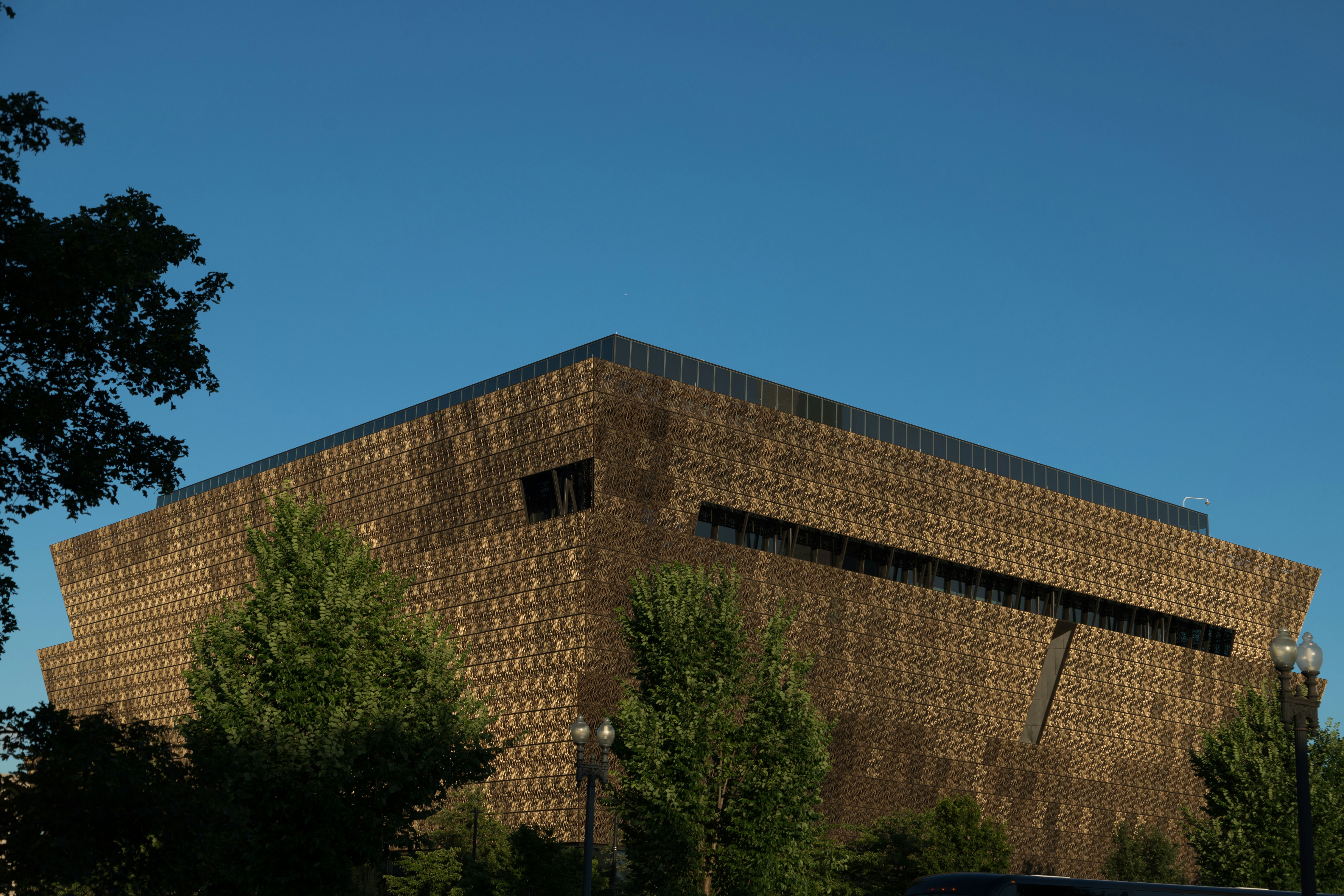
Since opening in September 2016, the Smithsonian’s National Museum of African American History and Culture (NMAAHC) has welcomed 10 million in-person visitors. The museum’s clear popularity aligns with the finding of a position paper that was published by U.S. Department of Commerce on cultural and heritage tourism in 2005. According to the paper, “cultural and heritage tourism provides a means of preserving and perpetuating our nation’s cultural heritage through education, increased revenues and audiences, and good stewardship.”
The current administration’s attacks on the Smithsonian Institution are bad for education, and they are bad for business. Censoring history will not make our nation better. Americans value having the freedom to choose. Many value the freedom to learn from history that is complete and intact. Insisting that the Smithsonian align with the litmus test of “Americanism” is state-sponsored indoctrination.
It is true. Slavery isn’t the only chapter in the nation’s history, but facts matter. As the United States prepares to celebrate 250 years, it is important to remember that slavery was legal during 35% of the years that are being commemorated. Jim Crow, which supplanted the system of slavery with apartheid, was legal during 40% of the years that are being commemorated. Putting it in perspective, this represents 75% of the years that correspond with the nation's history since 1776, and this 75% is consequential to current realities in our nation that affect Black Americans as well as Black communities.
The human atrocity of slavery isn’t an addendum to American history. It is part of the foundation of American history. As suggested by George Barnard’s photograph, it was as normal as selling Black bodies on main street. The practice was disgraceful, barbarous, and cruel. It would be equally disgraceful for our nation not to learn from it, to trivialize how bad conditions really were, to repeat the practice of dehumanization, or to further entrench systems of power, abuse, control, and exploitation that target people of color.
Currently, some people are tired of Black people talking about slavery. For this reason, it is necessary to repeat that our narratives are entwined, and they cannot be untangled. As noted by New Zealand author Witi Ihimaera, the United States is “the rope of man.” These strands make us equal partners or co-heirs in the enterprise of our nation.
Slavery was an atrocity for the U.S., and it wasn’t the only one. Many years later, the scar remains clearly visible, and the propaganda of Americanism and censorship are not going to heal the wound. We can’t cover up injustice with the blanket of propaganda. Instead, this wound requires reparations, truth, and time for proper healing.
If the current administration wants to celebrate a 250-year national milestone, it can start by learning from history. Complete and accurate history isn’t a bludgeon, a burden, or a divisive concept. Instead, it is a treasure that we bequeath to the next generation. However, allowing the public to forget history through cultural erasure is a dangerous slope. It is an insult to the many uncredited people who built this nation through sacrifice, and it robs the broader public of assets that cannot be replaced.
Carlton Eley was senior director of federal strategies at Race Forward, where he managed the Federal Initiative to Govern for Racial Equity (FIRE). He also served for 20 years as a federal civil servant at the U.S. Environmental Protection Agency. The views expressed are his own.