Evaluation for and in Solidarity: Practicing Narrative Evaluation for Systems Change
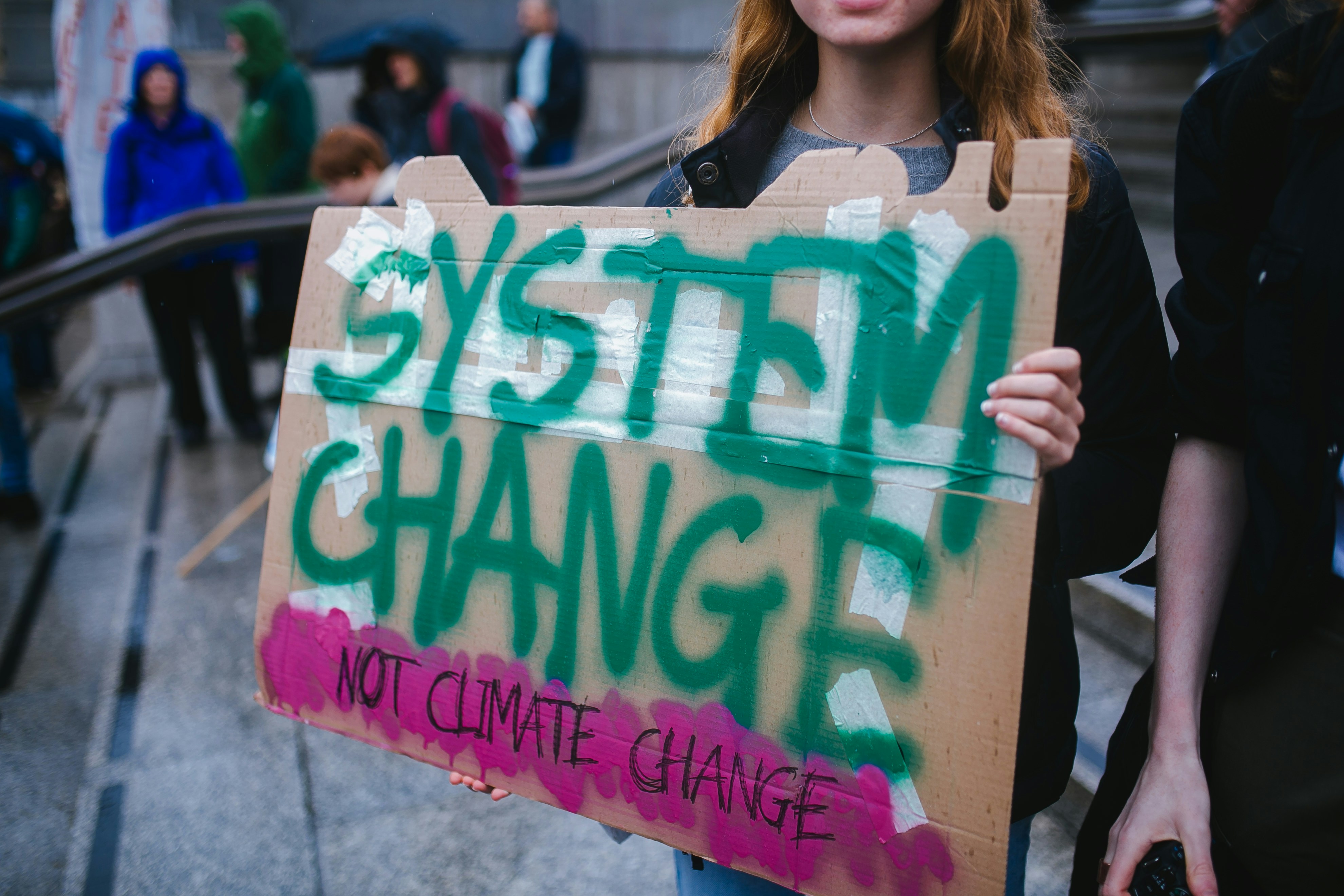

Across our field, people are asking, “How do we measure the impact of our narrative change efforts?” Narrative researchers and evaluators have long been interested in understanding how to measure the impact of programs, campaigns, and narrative interventions designed to create systemic change that moves us toward racial justice and liberation.
This work, however, has always been difficult because systems of dominance such as white supremacy and capitalism are complex, interconnected, and deeply rooted. It takes time to understand the ripple effects of our interventions on such systems, including unintended outcomes such as the backlash against racial and gender justice we are seeing now. Systems transformation can rarely be measured in a single moment in time. It requires coordinated multi-sector strategy that acknowledges the interconnections between structural racism, capitalist extraction, and attacks against immigrants and LGBTQ+ communities.
Narrative evaluations tend to narrowly focus on measuring whether messages resonate with audiences, or whether narrative interventions significantly shift public attitudes on a particular issue. These measures are important, but if we are serious about leveraging narrative power for systemic change, we need to reenvision narrative power as a core intervention in systems change. Evaluations that fully measure the scope of impact should help us understand how narratives contribute to systems change. Evaluation should explore how these systems evolve, shift power, and, most importantly, improve the material conditions of the people most impacted by these systems.
To do this, we must develop new methods of evaluation anchored in processes, metrics, and relationships that best position us to evaluate systems change at the scale in which it happens. We need evaluation methods that are grounded in solidarity and connected across the broader social justice movement ecosystem so that we can learn from our respective perspectives and strengthen our tactics and strategies as we move toward a democracy where one group is not disadvantaged at the expense of another.
Why is evaluating systems change so difficult?
Systems change is difficult to measure because systems are interconnected, adaptive, and deeply rooted in history. Systems like white supremacy, capitalism, and colonialism reinforce and depend on one another, shaping our livelihoods and creating shared struggles.
These same systems are also adaptive and fluid, responding to pressure as they shapeshift and evolve. For example, as communities called for racial justice and liberation, institutions and corporations have adopted sanitized versions of “DEI,” transforming calls for systems change into policies and practices stripped of power. We have witnessed this many times in the U.S., where singular policies aimed at addressing an issue are too often unable to create real, material, and lasting change because they do not attend to root causes or are unable to evolve. We saw this, for example, after the passage of marriage equality, which represented a major legal victory in the United States but nevertheless still left many LGBTQ+ folks vulnerable to discrimination, harassment, and violence. The policy shifted but the systems of domination, hierarchy, and individualism that undergird it evolved and remained unchanged.
These elements make measuring long-term systems change difficult, but not impossible. In our pursuit of building narrative power for systems change, we must remain committed to measuring and documenting how power is structured and how it shifts across time, space, movements, issue areas, and sectors. Below we offer three considerations for leveraging narrative evaluation for systems change.
Three considerations for evaluating systems change:
1. Shifting the time horizon of evaluation
Systems change is a generational project. That means that we must approach evaluation by tracking shifts in real time, while also taking into account past strategies and future wins.
Looking backwards helps us understand how previous movements changed systems, helping us answer questions like: What strategies worked? What narratives changed public understanding? What interventions created narrative and structural opportunities that we are now able to build on? Understanding this history helps us learn from the experiments, successes, and failures of previous movements for justice and liberation and apply these lessons to our work today.
It is also just as important to look forward because many of the interventions and experiments that we invest in today may not produce visible results for years. Our task is to track systems change in real time and to document it as it unfolds, while developing a deep understanding that the work we do today enables movements in the next ten, fifty, or 100 years.
Take, for example, the “defund the police” slogan. If we only measured its success by counting the number of cities that immediately moved to reduce or eliminate their police budgets, then we would miss one of its biggest impacts. Messaging like “defund the police” opened up people’s imaginations and encouraged them to ask what their communities could look like if police resources were instead invested in their neighborhoods, schools, and healthcare institutions. It created what abolitionist Mariame Kaba calls a “jailbreak of the imagination,” which expanded what people believe is politically and socially possible.
While not every narrative and systems intervention creates an immediate and visible win, we must actively document, track, and measure these shifts by looking to both the past and the future.
2. Expanding who participates in evaluation
A longer time horizon also requires us to rethink who participates in evaluation. In narrative and communications work, evaluation is often treated as the domain of researchers and evaluators. However, if our ultimate measure of success is whether and how people most impacted by systems experience a change in material conditions, then evaluation has to include those affected by these systems.
Organizers, direct service providers, educators, and neighbors are the first to experience and notice shifts in material conditions. They understand how these systems operate in everyday life and they document their impact through informal conversations, townhalls, spontaneous video recordings of abuses of power, photographs, zines, and storytelling. Being in deep partnership with people and organizations across the movement ecosystem helps us be more attuned to the conditions on the ground and have a broader view of the movement landscape. Alongside those formally trained as researchers and evaluators, we need artists, archivists, oral historians, and neighbors who share their knowledge about when and how livelihoods and infrastructures change.
3. Grounding evaluation in solidarity
Given the scale of the systems we confront, it is impossible for a singular organization to address every aspect of the struggles we face today. We need to be in relationship with groups across sectors and roles. Our evaluations should help us measure the contributions of partner groups and organizations in ways that reveal the interconnections and shared strategies that drive systems change. At Race Forward, for example, we recognize that our work in the racial justice movement requires deep partnerships with groups working in public health, immigration, disability justice, etc.
We each bring expertise about different parts of the system. Being able to measure how our efforts enable one another’s success helps provide us with a more complete view of how these systems operate and transform, and how we build collective and narrative power.
Thus, a core practice in evaluation for systems change is to center collaboration and solidarity as methods for observing, documenting, and making sense of narrative power as a foundational practice in achieving systems change. —
Ultimately, evaluating systems change cannot be the sole responsibility of a single organization or research team. If narrative power is to become a core intervention in systems change, we need to recognize that the scale of the work demands that we be in deep relationship and collaboration with folks across the movement ecosystem. We need to practice evaluation for and in solidarity to win.