Movement-Builders You Should Know

There is no American History without women. Movements do not appear overnight; they are built in classrooms, churches, union halls, and the neighborhoods just trying to survive. Women have been at the center of that work, visionaries confronting petrochemical pollution in the Gulf South, building better representation for disabled bodies in healthcare, organizing sit-ins for human rights, designing labor protections for caregivers, and broadly pushing this country to expand who is seen and who is allowed to thrive.
Here we spotlight 24 women organizers – past and present – whose work we invite you to learn more about. The represent different generations and different fights, but each helped construct the foundation of movements that continue to challenge structural racism, economic inequality, and environmental harm in the United States.
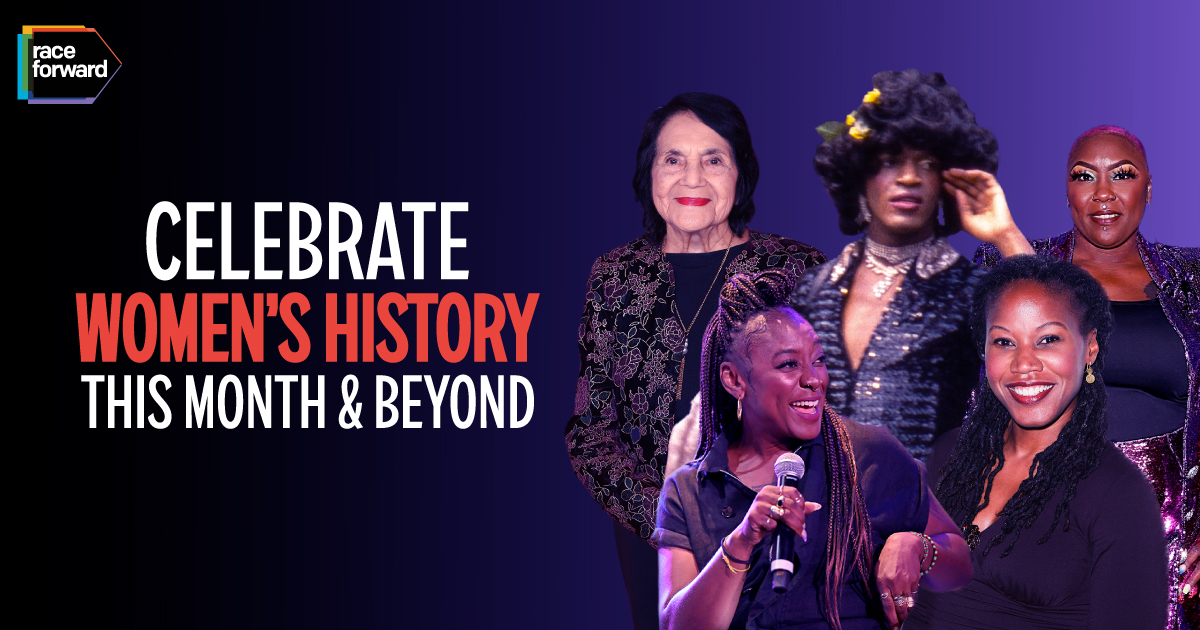
Top Row (from left to right) Dolores Huerta, Marsha P. Johnson and Shirley Raines. Bottom Row (from left to right) Alicia Garza and Majora Carter. Courtesy of Getty Images
Women Leading the Civil Rights Struggle
Gloria Richardson (1922-2021)
Richardson was the leader of the Cambridge, Maryland Nonviolent Action Committee in the early 1960s, organizing against segregation, police violence, and economic exclusion. She coordinated mass demonstrations and confronted state power through direct action, including standing against the National Guard presence in the city. Her work in Maryland expanded the civil rights story beyond the sit-ins and boycotts in the Deep South, showing how border states were also battlegrounds against systemic racism.
Learn more about Gloria Richardson
Monica Ramírez (1979-)
Ramírez founded Justice for Migrant Women, a national organization advocating for farmworker women facing sexual harassment, wage theft, and exposure to agricultural chemicals. She began her career working with farmworker advocacy groups in Ohio and California, documenting labor abuses and unsafe working conditions in the fields. Ramírez helped amplify farmworker women’s voices in the broader #MeToo movement through the “Alianza Nacional de Campesinas” letter of solidarity to Hollywood survivors. Her organizing has connected labor rights, immigration justice, and environmental health within the agricultural economy.
Learn more about Monica Ramírez
Women Leading the Fight Against Toxics
Hazel M. Johnson (1935-2011) and Cheryl Johnson (1960-)
Hazel Johnson organized residents of Altgeld Gardens on Chicago’s far South Side after witnessing alarming rates of cancer, respiratory illness, and other health problems in her community. She founded People for Community Recovery in the late 1970s and documented how landfills, sewage treatment plants, and industrial dumping had surrounded the public housing development where thousands of Black families lived. Her daughter, Cheryl Johnson, later continued the work, expanding community monitoring, policy advocacy, and youth engagement programs in the same neighborhood. Together, they built one of the country’s longest-running environmental justice organizations rooted in resident-led science and organizing.
Learn more about Hazel Johnson and Cheryl Johnson
Margie Richard (1941-2019)
Richard organized residents of Norco, Louisiana, a community located beside the Shell refinery along the Mississippi River. After a deadly explosion and years of exposure to toxic emissions, she founded Concerned Citizens of Norco and began documenting pollution and health problems among residents living just yards from petrochemical facilities. Her organizing forced Shell to negotiate directly with residents and ultimately led to the relocation of dozens of families from the neighborhood closest to the refinery. Richard’s work became one of the most visible victories for fenceline communities confronting petrochemical power along the Gulf Coast.
Learn more about Margie Richard
Mari Copeny (2007-)
Known widely as “Little Miss Flint,” Copeny began organizing as a child during the Flint water crisis. She wrote a letter to President Obama that helped bring national attention to the crisis and has since advocated for safe drinking water, environmental health protections, and youth engagement in policy debates.
Learn more about Mari Copeny
Women Transforming Education and Opportunity
Sylvia Mendez (1936-)
Mendez was a central figure in the Mendez v. Westminster case that challenged school segregation in California during the 1940s. When she and her siblings were denied enrollment at a white school in Orange County, her parents joined other Mexican American families to file a federal lawsuit against segregated school districts. The 1947 ruling ordered the desegregation of California public schools years before Brown v. Board of Education. Mendez has spent decades speaking in classrooms and community spaces about the case and the history of educational segregation.
Learn more about Sylvia Mendez
Chelsea Miller (1997-)
Miller is a civic educator and co-founder of Freedom March NYC, a youth-led racial justice organization formed in the wake of the 2020 protests against police violence. Through Freedom March and her educational initiative Freedom School, Miller develops political education programs that teach young people about voting rights, systemic racism, and civic participation. Her work focuses on building accessible civic education tools and training young organizers to understand how policy, protest, and local governance intersect. Miller’s organizing has helped bring youth-led political education into classrooms, community spaces, and digital platforms.
Learn more about Chelsea Miller
Women Building Labor Power
Dolores Huerta (1930-)
Huerta co-founded the United Farm Workers and spent decades organizing agricultural workers in California and across the Southwest. She coordinated strikes, negotiated labor contracts, and helped lead the national grape boycott that pressured growers to improve wages and conditions. Huerta also organized voter registration drives and political campaigns to expand Latino political representation. Her organizing connected labor rights, immigrant justice, and community political power.
Learn more about Dolores Huerta
Ai-jen Poo (1974-)
Poo co-founded the National Domestic Workers Alliance, organizing nannies, housekeepers, and caregivers who historically lacked basic labor protections. She has advocated for domestic workers’ bills of rights in multiple states and pushed for national recognition of care work as essential labor. Poo also helped launch the Caring Across Generations campaign to address long-term care for aging populations. Her work centers on the dignity and economic security of workers who care for children, elders, and people with disabilities.
Learn more about Ai-jen Poo
Women Advancing Energy Justice
Colette Pichon Battle (1972-)
Pichon Battle is a Gulf Coast organizer and founder of Taproot Earth, an organization supporting frontline communities facing climate disasters and industrial pollution. After Hurricane Katrina, she worked with displaced residents and communities struggling to rebuild amid environmental and economic inequality. Her organizing emphasizes local leadership, cultural resilience, and climate adaptation rooted in community priorities, making her a national voice for Gulf South energy justice.
Learn more about Colette Pichon Battle
Kandi Mossett (1974-)
Mossett, a member of the Mandan, Hidatsa, and Arikara Nation, has been a leading advocate for Indigenous energy justice and environmental protection. She has organized against oil and gas development projects affecting tribal lands, including mobilization during the Standing Rock pipeline protests. Mossett works with the Indigenous Environmental Network to elevate tribal sovereignty and the rights of Indigenous communities in energy policy debates. Her advocacy connects climate action with Indigenous self-determination.
Learn more about Kandi Mossett
Women Expanding Disability Justice
Judith Heumann (1947-2023)
Heumann was a central leader in the disability rights movement and helped organize the historic 504 sit-ins that demanded enforcement of federal disability protections. She later served in leadership roles within the U.S. Department of Education and the State Department, advocating for disability inclusion in domestic and international policy. Heumann also worked with organizations around the world to strengthen disability rights frameworks. Her activism helped lay the groundwork for the Americans with Disabilities Act.
Learn more about Judith Heumann
Vilissa Thompson (1985-)
Thompson founded Ramp Your Voice!, a platform advocating for Black disabled people and addressing racism within disability spaces. Through writing, public speaking, and policy engagement, she highlights the experiences of Black disabled women and communities. Thompson’s work has focused on representation, healthcare access, and cultural narratives about disability. She has helped expand public conversations about disability justice and intersectionality.
Learn more about Vilissa Thompson
Haben Girma (1988-)
Girma became the first deafblind graduate of Harvard Law School and has since advocated for accessibility in education, technology, and public life. She works with companies, universities, and public institutions to improve inclusive design and communication practices. Girma frequently speaks about the importance of accessibility as a form of innovation and civil rights. Her advocacy has helped broaden awareness of accessibility barriers in digital and physical spaces.
Learn more about Haben Girma
Women Organizing for Housing, Urban Revitalization, and Land
Cushing N. Dolbeare (1926-2015)
Dolbeare was a housing policy analyst who spent decades researching the shortage of affordable housing in the United States. Working with the National Low Income Housing Coalition and other organizations, she documented how federal policy decisions created and sustained housing inequality. Dolbeare’s reports provided some of the most widely cited data on housing affordability and homelessness. Her research informed housing advocacy campaigns and policy debates nationwide.
Learn more about Cushing Dolbeare
Shirley Raines (1967-2026)
Raines founded Beauty 2 the Streetz, a Los Angeles organization that provides food, hygiene supplies, clothing, and hair care services to people experiencing homelessness. She began the effort after volunteering with local outreach groups and recognizing the need for dignity-centered services. Raines organizes weekly outreach events and mobilizes volunteers across the city. Her work has drawn national attention to the human dignity of people living without housing.
Learn more about Shirley Raines
Majora Carter (1966-)
Carter is an urban revitalization strategist and environmental justice advocate who began organizing in the South Bronx to address environmental inequality and economic disinvestment. In the late 1990s, she founded Sustainable South Bronx, where she helped launch one of the nation’s first urban green jobs training programs and led the campaign to build the South Bronx Greenway, transforming neglected waterfront industrial space into public access parks and green infrastructure. Carter’s work focused on demonstrating that environmental restoration and economic opportunity could happen simultaneously in historically disinvested neighborhoods. Through subsequent initiatives, including The Majora Carter Group, she has continued to develop community-driven models for climate resilience, equitable development, and neighborhood-based economic revitalization that allow longtime residents to benefit from environmental improvements rather than being displaced by them.
Learn more about Majora Carter
Women Shaping the Climate Movement
Casey Camp-Horinek (1948-)
Camp-Horinek is a Ponca Nation elder and environmental advocate who has organized against fossil fuel extraction and environmental degradation affecting Indigenous lands. She has spoken internationally about the cultural and spiritual significance of land and water protection. Camp-Horinek has been active in campaigns opposing pipelines and advocating for Indigenous environmental leadership. Her activism connects environmental protection with Indigenous sovereignty.
Learn more about Casey Camp-Horinek
Connie Leeper (?)
Leeper is a North Carolina-based climate justice organizer and cultural worker who served as Climate Justice Director at NC WARN and helped found and co-lead the NC Climate Justice Collective, a formation built to center frontline communities and justice-rooted climate solutions. In that work, Leeper focused on challenging monopoly utility power and the fossil-fuel business model in the Southeast, pairing regulatory and legal strategy with grassroots organizing and narrative work. In 2023, Leeper publicly marked a transition into movement elderhood, emphasizing intergenerational leadership and cultural shift work as essential to climate justice organizing.
Learn more about Connie Leeper
Women Advancing LGBTQ Liberation
Marsha P. Johnson (1945-1992)
Johnson was a Black trans activist and community organizer in New York City who supported homeless LGBTQ youth and sex workers. She was involved in early gay liberation organizing and helped create spaces of mutual aid and safety for queer communities. Johnson’s activism included street outreach, fundraising, and organizing through STAR House. Her work remains central to the history of trans and queer liberation movements.
Learn more about Marsha P. Johnson
Sylvia Rivera (1951-2002)
Rivera was a Puerto Rican and Venezuelan trans activist who participated in the early LGBTQ liberation movement in New York City. Alongside Marsha P. Johnson, she co-founded the Street Transvestite Action Revolutionaries (STAR), which supported homeless queer and trans youth. Rivera advocated for housing, safety, and legal protections for transgender people often excluded from mainstream LGBTQ organizing. Her activism centered the needs of those most marginalized within the movement.
Learn more about Sylvia Rivera
CeCe McDonald (1989-)
McDonald is a Black trans activist whose case drew national attention after she was incarcerated following a violent attack in Minneapolis. After her release, she began organizing around prison abolition, violence against trans people, and systemic injustice in the criminal legal system. McDonald has worked with advocacy organizations and spoken widely about trans survival and community defense. Her story helped galvanize national conversations about violence against trans women.
Learn more about CeCe McDonald
Women Spearheading Narrative Movements
Barbara Ransby (1958-)
Ransby is a historian and organizer whose scholarship documents the leadership of Black women in social movements. Her biography of Ella Baker is widely regarded as one of the most detailed studies of grassroots organizing in the civil rights movement. Ransby has also been active in contemporary social justice organizing and political education initiatives. Her work connects historical research with current movement strategy.
Learn more about Barbara Ransby
Charlene Carruthers (1985-)
Carruthers is a movement strategist and former national director of the Black Youth Project 100. Through BYP100 she helped organize campaigns addressing police violence, economic inequality, and LGBTQ justice within Black communities. Carruthers has also developed leadership training programs for young organizers. Her work has supported the growth of youth-led organizing in the United States.
Learn more about Charlene Carruthers
Additional Collections of Women Leaders
The Mothers of Environmental Justice Oral History Collection (coming May 2026)
The Mothers of Environmental Justice Oral History Collection is an upcoming series from the Environmental Justice Oral History Project documenting the stories of women who have shaped the environmental justice movement across the United States. Through in-depth oral histories, the collection captures the lived experiences, strategies, and personal journeys of organizers who have fought toxic pollution, land dispossession, and environmental inequality in their communities. By preserving these conversations, the project highlights the central role women – especially women of color – have played in building and sustaining environmental justice movements.
Follow Along with the Mothers of Environmental Justice Collection
We The Women by Norah O’Donnell
We the Women is a recently released book that explores the history of women’s leadership across major social movements in the United States. Through narrative storytelling and historical profiles, the book highlights the contributions of organizers, advocates, and community leaders who expanded the meaning of democracy and justice in their communities. Spanning struggles for civil rights, labor rights, environmental protection, and social equity, the book situates women’s leadership as a driving force in shaping the nation’s political and social landscape.